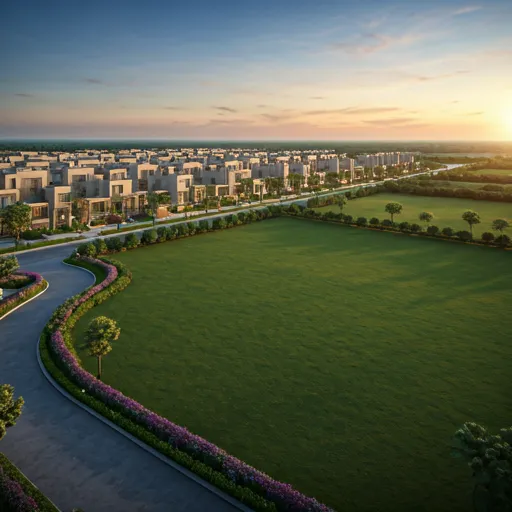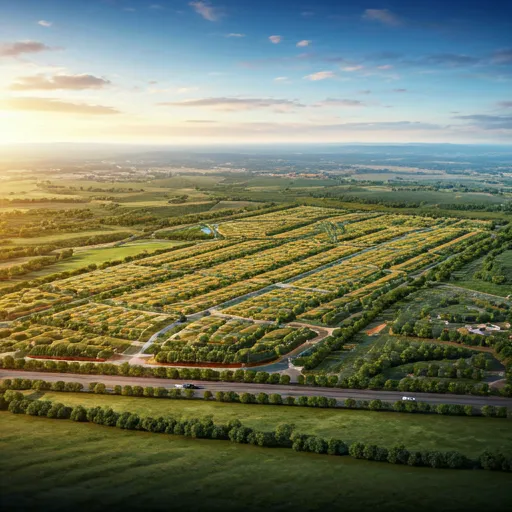
“The growing interest in Vasai–Virar–Palghar reflects how infrastructure plans can influence real estate markets and investor expectations. In my view, this trend deserves careful evaluation rather than simply being seen as a sign of guaranteed future returns.”
The expanding geography of the Mumbai Metropolitan Region continues to capture the imagination of land buyers, developers, and institutional investors alike.
A recent Moneycontrol report highlights that land prices in select pockets of the Vasai–Virar–Palghar region have doubled or tripled over the past two years, amid expectations surrounding proposed infrastructure projects often referred to under the broader “Mumbai 4.0” vision.
Rising valuations in emerging regions are understandable when major transit corridors are announced. However, as someone who has spent over 26 years analyzing land markets and statutory records across Maharashtra, I believe this trend deserves careful, rational evaluation rather than being accepted as an automatic guarantee of endless returns.
The Psychology of Rising Land Prices: Expectations vs. Realities
Infrastructure announcements carry enormous psychological weight. When feasibility studies, expressway alignments, or suburban rail extensions are unveiled, speculative capital often races ahead of government machinery.
It is vital to recognize that price appreciation in select locations does not guarantee similar performance across an entire region. In many emerging pockets, rapid price escalation is driven by secondary trading among intermediaries rather than end-user absorption or on-ground commercial commissioning.
A land parcel whose asking price has tripled on paper within 24 months does not automatically represent a threefold increase in intrinsic utility. Without sanctioned non-agricultural (NA) permissions, legal access roads, and verified water connections, speculative price gains can quickly face liquidity friction when secondary buyers fail to materialize.
Beyond Connectivity: The Five Civic Fundamentals
Improved connectivity can undoubtedly create opportunities. Highways and transit corridors unlock geographical access and shorten commuting times.
However, sustainable real estate growth also requires reliable water supply, drainage, roads, electricity, and employment opportunities.
A region cannot evolve into a vibrant, liveable urban ecosystem solely on the back of arterial highways. True habitation and industrial productivity require a resilient civic foundation:
Raw acreage without confirmed municipal water allocation or perennial potable sources cannot support sustainable residential townships or commercial establishments.
The coastal and estuarine geography of Vasai–Virar–Palghar demands robust flood mitigation, engineered stormwater conduits, and proper sewage treatment systems.
Proximity to major highways means very little if last-mile village approach roads are narrow, unpaved, or subject to private easement disputes.
Modern gated layouts, data centres, and manufacturing plants require stable high-tension sub-stations and uninterrupted electrical supply.
For a growth belt to sustain its real estate values across market cycles, it must generate local employment within manufacturing, logistics, services, or technology—rather than relying solely on residents making exhausting two-hour daily commutes into Mumbai.
What Land Investors Must Focus On
For investors, the focus should be on legally clear land, permitted land use, actual infrastructure progress, and realistic long-term demand.
Before committing capital to land in an emerging belt, prospective buyers must execute thorough due diligence across five essential criteria:
-
1
Verify 100% Legally Clear, Marketable Freehold Title: Insist on a 30-year revenue search report, scrutinize 7/12 extracts and Ferfar (mutation entries), and ensure no ancestral disputes, tribal restrictions, or pending litigations.
-
2
Confirm Permitted Land Use & Sanctioned Zoning: Verify whether the land falls under Residential, Commercial, Green Zone, or Coastal Regulation Zone (CRZ) restrictions, and ensure statutory Non-Agricultural (NA 44) permissions are in place.
-
3
Assess Actual Civil Progress vs. Proposed Plans: Distinguish between preliminary Detailed Project Reports (DPRs) and awarded tenders with active on-ground earthmoving, road surfacing, or utility installation.
-
4
Benchmark Realistic Long-Term Demand & Holding Costs: Base your investment calculus on realistic multi-year holding horizons rather than expecting speculative flips within 12 months.
-
5
Avoid Unsanctioned Subdivisions & Informal Plot Schemes: Never purchase plots delineated only by informal boundary stones; insist on Collector-approved layouts with sanctioned open spaces and public access roads.
The Foundation of Responsible Land Investment
An emerging market may offer potential, but informed decisions and proper due diligence remain the foundation of responsible land investment.
The story of Maharashtra’s real estate expansion has always proven that genuine fortunes are built not by chasing price spikes, but by anchoring your capital in title-clear, well-planned, and legally sound assets.
“An emerging market may offer potential, but informed decisions and proper due diligence remain the foundation of responsible land investment.”

About Binod Agarwal
Binod Agarwal brings 16 years of service in the Indian Armed Forces and over 26 years of real estate, governance, and business experience across Navi Mumbai and Maharashtra. His philosophy has always anchored in clear titles, ground verification, and long-term generational wealth.