“The future of the Mumbai region will not be shaped by infrastructure alone. It will also depend on how thoughtfully residential opportunities are planned around that infrastructure.”
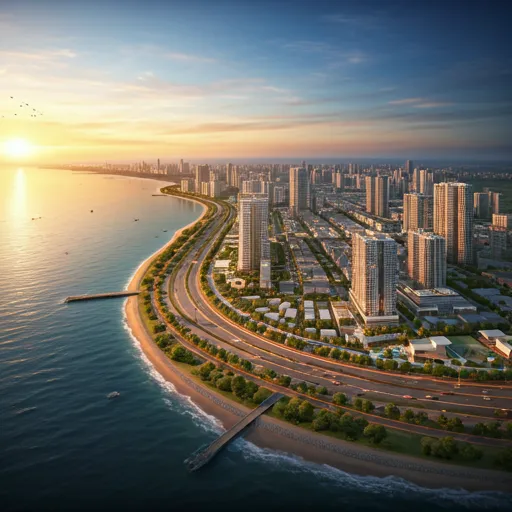
The Mumbai Metropolitan Region (MMR) is witnessing a significant shift in its real estate landscape. As transformational infrastructure projects, improved trans-harbour connectivity, and emerging commercial districts expand the region’s development horizon, the nature of residential demand is evolving in tandem.
For decades, MMR’s residential narrative was virtually synonymous with vertical apartment towers—a natural consequence of severe land constraints in the historic island city and older suburban nodes. However, as connectivity unlocks vast expanses of mainland territory across Raigad and Navi Mumbai, prospective homeowners are increasingly seeking alternative avenues of land ownership.
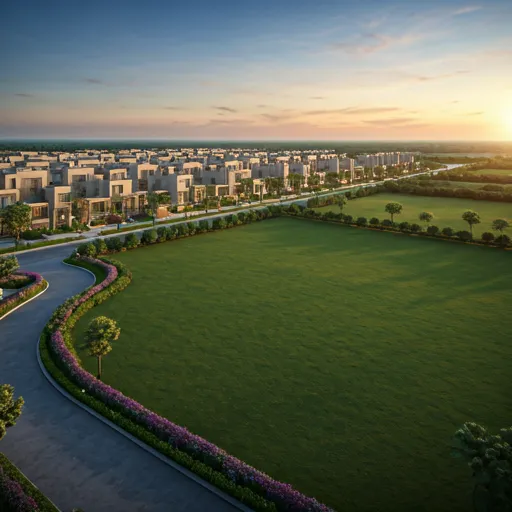
One recent development that clearly reflects this changing landscape is G Square Group’s announced entry into Maharashtra through a proposed plotted residential project in Narpoli, Panvel.
According to the company’s announcement, the proposed development will span approximately 125 acres and comprise 364 residential plots, with plot sizes starting from 1,000 sq. ft. Furthermore, the developer has indicated ambitious plans for 13 projects across Maharashtra, covering strategic locations within the Mumbai 3.0 growth corridor, Pune, and the Pune Metropolitan Region.
This announcement brings renewed focus to a crucial trend: the rapid emergence of organized plotted developments as a viable, sought-after residential asset class in the expanding Mumbai region.
Why Panvel and the Surrounding Region Matter
Panvel has increasingly become an indispensable anchor in the wider Mumbai growth story. Situated at the geographic and economic crossroads of the Mumbai Metropolitan Region, its proximity to landmark transport networks—most notably the operational Atal Bihari Vajpayee Sewri–Nhava Sheva Atal Setu (MTHL), the upcoming Navi Mumbai International Airport (NMIA), the Mumbai–Pune Expressway, and the Virar–Alibaug Multi-Modal Corridor (MMC)—has concentrated unprecedented developmental momentum in surrounding corridors.
As travel times between mainland Raigad and South Mumbai compress from hours to minutes, economic activity is following close behind. Corporate campuses, logistics hubs, data centres, and industrial clusters are establishing strong footholds across the Panvel–Uran–Pen belt.
With the expansion of employment centres, residential requirements are naturally becoming more diverse:
While vertical apartments continue to serve a substantial segment of homebuyers prioritizing compact city living and shared amenities, they lock buyers into rigid floor plates, ongoing recurring maintenance escalations, and zero direct ownership of the underlying land.
Plotted developments offer another route to ownership. They provide buyers clear, freehold title to the land beneath their feet, along with unparalleled flexibility in deciding the architectural design, floor area, and construction timeline of their homes, subject to applicable municipal regulations.
For a growing demographic of professionals, entrepreneurs, and families looking toward the Navi Mumbai airport influence zone, owning a tangible land parcel offers autonomy and security that high-density vertical living simply cannot replicate.
The Growing Interest in Plotted Developments
The proposed Narpoli project brings attention to a broader structural question: how will residential preferences evolve as the Mumbai region expands into its next economic phase?
For many homebuyers, the appeal of an individual plot lies in the opportunity to build a bespoke independent home—with private outdoor spaces, natural ventilation, and customized layouts—rather than adapting to a standardized, mass-produced apartment floor plan. For others, it is the financial flexibility to acquire the land today, hedge against regional inflation, and phase construction over years as family requirements and disposable capital evolve.
However, as anyone with experience in land banking knows, the attractiveness of a plotted development cannot—and must not—be assessed by location or promotional marketing alone.
Unencumbered, dispute-free title is the non-negotiable foundation. Investors must scrutinize 30-year search reports, mutation entries (Ferfar), absence of litigation, and clean ownership records free from ancestral or tenancy claims.
Ensure the land holds valid Non-Agricultural (NA 44) conversion orders from the competent planning authority (Collector / CIDCO / MMRDA) with formal layout sanction and MahaRERA registration.
Plots are only as viable as their supporting infrastructure. Verify actual delivery of wide motorable access roads, subterranean electrical ducting, stormwater drainage channels, water pipeline connections, and perimeter security.
Examine how the parcel fits into the broader Regional Development Plan. Proximity to planned arterial bypasses, green reservation belts, and public civic amenities determines whether a project appreciates into a thriving neighbourhood.
A plot on paper without verified approvals, clear access roads, or utility commitments can quickly become an illiquid burden. Rigorous on-ground verification must precede every buying decision.
Looking Beyond the Announcement: Execution Is Everything
G Square’s proposed Maharashtra expansion is undoubtedly an interesting development to watch. It reflects the growing institutional attention being directed toward the Panvel and Mumbai 3.0 growth corridors, demonstrating that prominent developers from southern markets recognize MMR’s immense regional expansion potential.
At the same time, an announced project and its eventual physical delivery represent two vastly different stages. In plotted real estate, the distance between signing land MoUs and handing over demarcated, infrastructure-ready plots with clear individual 7/12 extracts requires disciplined legal execution, regulatory clearances, and substantial capital expenditure on civic trunk works.
Buyers and investors must evaluate every development through an objective, empirical lens:
-
1
Verify Ground-Truth Approvals: Never rely solely on marketing brochures. Insist on inspecting the stamped layout plan approved by the local planning authority, NA order, and MahaRERA registration certificate.
-
2
Examine Right-of-Way and Access Roads: Ensure that external approach roads leading to the 125-acre project site are public, legally sanctioned thoroughfares capable of handling township-scale vehicular movement.
-
3
Assess Utility Timelines: Inquire about statutory water supply quotas, electrical substation clearances, and sewage treatment plans. Independent living demands self-sustaining civic services.
-
4
Prioritize Long-Term Livability: Look beyond immediate plot pricing to consider social infrastructure—schools, medical facilities, retail daily conveniences, and public transit connectivity.
As the Mumbai region continues its outward expansion, the real generational opportunity will belong to developments that successfully combine prime location advantages with responsible master planning, transparent processes, and genuine end-user value.
The larger takeaway is unmistakable: the future of the Mumbai region will not be shaped by megaproject infrastructure alone. It will ultimately depend on how thoughtfully and transparently residential communities are planned around that infrastructure.
“An announced project and its eventual delivery are two completely different stages. The real opportunity lies in developments that combine strategic location with transparent title processes, responsible planning, and enduring end-user value.”

About Binod Agarwal
Binod Agarwal brings 16 years of service in the Indian Armed Forces and over 26 years of real estate, governance, and business experience across Navi Mumbai and Maharashtra. His philosophy has always anchored in clear titles, ground verification, and long-term generational wealth.