“The future of urban development is increasingly shaped by the economic opportunities a city can create, not just the infrastructure it builds.”
Across the wider Mumbai Metropolitan Region (MMR), urban growth is entering a new, qualitative phase. For decades, regional planning was primarily focused on expanding city borders, pouring concrete, and laying highways to ease congestion in the historic island core.
However, modern global experience proves that infrastructure alone does not create a thriving metropolis. A city flourishes when physical connectivity is matched with vibrant economic engines that generate skilled employment, foster intellectual capital, and support high-quality living.
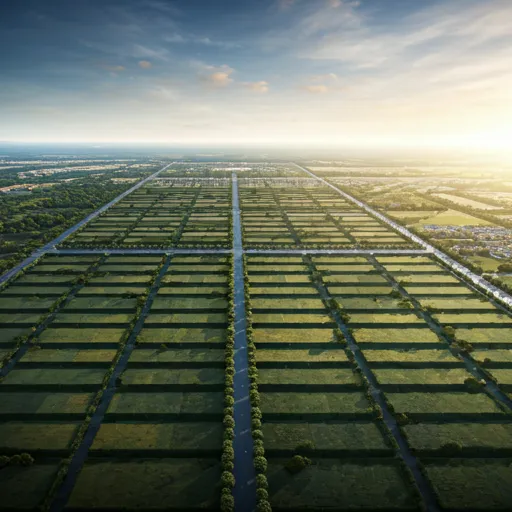
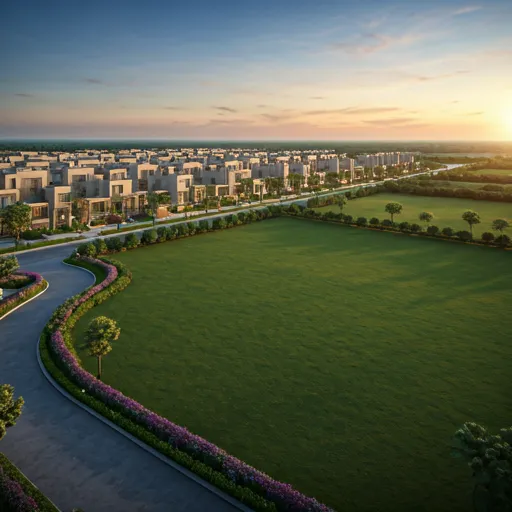
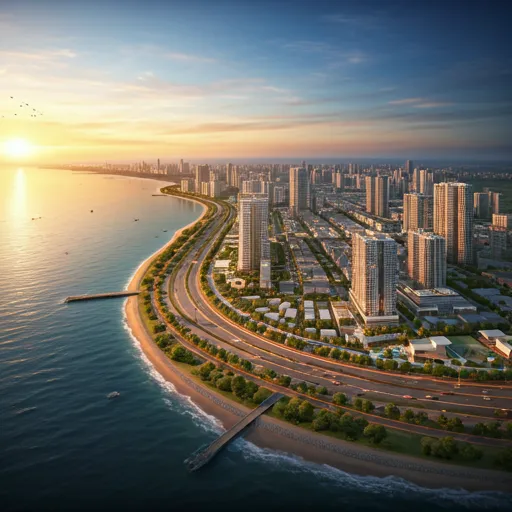
Maharashtra’s articulated vision for Mumbai 3.0 reflects this strategic evolution. According to recent reports, Chief Minister Devendra Fadnavis has outlined a comprehensive master plan for a planned urban extension around the Navi Mumbai Airport Influence Notified Area (NAINA), structured around distinct, specialised hubs focused on education, healthcare, deep technology, and global business operations.
By designing dedicated centres for specific sectors, the state is moving from generic real estate expansion toward an integrated economic ecosystem.
An Ecosystem Built Around Specialised Hubs
The core philosophy of Mumbai 3.0 is cluster-based economic development. Rather than allowing disjointed commercial and residential sprawl, the NAINA master plan aims to concentrate knowledge, talent, and capital into specialised centres that reinforce one another.
One of the most ambitious proposed components is an education hub designed to accommodate 12 to 15 international foreign universities and roughly one lakh (100,000) students. Attracting globally recognised academic institutions brings world-class curriculum, research facilities, and intellectual exchange directly to Maharashtra, ensuring that the next generation of engineers, data scientists, and managers are trained within the region.
Complementing the education cluster, the blueprint incorporates a world-class Medicity dedicated to advanced healthcare, specialized medical research, and quaternary clinical care. Alongside it, an innovation city will focus on deep technology, artificial intelligence, and robotics, flanked by a dedicated district for Global Capability Centres (GCCs).
Provides global academic infrastructure for ~100,000 students. Bridges the gap between Indian talent and global higher education while fostering cross-border research, patents, and technical skill development.
A concentrated cluster of super-specialty hospitals, medical research institutes, and wellness campuses, expanding regional access to cutting-edge diagnostics, clinical trials, and medical tourism.
State-of-the-art incubation zones, high-performance computing labs, and testing facilities engineered for machine learning, generative AI, advanced robotics, and frontier software development.
Anchors multinational enterprises delivering high-value shared services, engineering R&D, risk analytics, and enterprise technology, creating thousands of high-income corporate careers.
Together, these proposed centres could create a resilient and highly diversified regional economy. Educational institutions nurture talent; healthcare infrastructure guarantees civic well-being; and innovation hubs attract venture capital and enterprise clients.
GCCs, which support multinational companies through mission-critical functions such as software engineering, cybersecurity, and quantitative analytics, play an especially catalytic role. They generate stable, high-compensation employment that directly fuels consumer demand, retail vitality, and high-end residential housing.
Why Planning Beyond Infrastructure Matters
Connectivity remains an indispensable prerequisite for opening any new territory. Landmark infrastructure projects—such as the Atal Bihari Vajpayee Sewri–Nhava Sheva Atal Setu (MTHL), the upcoming Navi Mumbai International Airport (NMIA), the Virar–Alibaug Multi-Modal Corridor (MMC), and new coastal freeway links—have dramatically shortened physical travel times across the harbour.
However, connectivity alone is merely the conduit; it does not constitute the destination. Sustainable regional growth depends fundamentally on employment opportunities, public services, social infrastructure, cultural vitality, and places where families can live, study, and work effectively without facing exhausting daily commutes.
The proposed specialised hubs offer a progressive vision of urbanism in which economic activity and community well-being are planned hand-in-hand with physical transportation networks.
Sea links, expressways, metro lines, and airport terminals compress spatial distance, allowing people and freight to move freely across the MMR. Without economic anchors, however, these routes risk becoming mere transit corridors.
Universities, medical complexes, AI research clusters, and corporate headquarters anchor permanent populations. They convert transit nodes into vibrant economic destinations where wealth, jobs, and social capital compound over decades.
Turning the Vision Into Outcomes
In my view, the long-term potential of Mumbai 3.0 will depend on how well these components are integrated. Education, healthcare, innovation, and global business operations cannot function in silos; they must be supported by reliable civic infrastructure, dependable utilities, and carefully planned urban governance.
The announced vision sets out an ambitious and commendable direction for Maharashtra. But its true impact will be determined by implementation, sustained public and private investment, and the timely development of supporting facilities on the ground.
-
1
Synchronised Civic & Digital Utilities: Ensuring uninterrupted water supply, subterranean 24/7 power grids, stormwater drainage canals, and dark-fibre connectivity are commissioned well before university campuses and hospitals welcome their first occupants.
-
2
Transparent, Title-Clear Land Aggregation: Providing international universities, hospital chains, and global institutional investors with 100% legally clear, Non-Agricultural (NA) land parcels free from title ambiguities, encumbrances, or boundary disputes.
-
3
Intermodal Last-Mile Public Transit: Establishing high-frequency electric bus rapid transit (e-BRT), light rail, and cycle highways connecting the NAINA hubs seamlessly with the Navi Mumbai International Airport and suburban railway lines.
-
4
Balanced Living & Social Amenities: Developing planned residential townships, green parks, schools, and cultural districts adjacent to employment hubs to create balanced, walkable communities that prevent urban fatigue.
The opportunity before us is to create far more than a new urban extension: it is to build a vibrant ecosystem that supports lifelong learning, high-skilled employment, technological innovation, and long-term economic prosperity.
If these proposed hubs are developed in a coordinated, disciplined manner, Mumbai 3.0 will not merely relieve pressure on the old city—it will emerge as an indispensable powerhouse in the region’s evolving economic landscape.
“The opportunity is to create more than a new urban extension: it is to build an ecosystem that supports learning, employment, innovation and long-term economic activity.”
About Binod Agarwal
Binod Agarwal brings 16 years of service in the Indian Armed Forces and over 26 years of real estate, governance, and business experience across Navi Mumbai and Maharashtra. His philosophy has always anchored in clear titles, ground verification, and long-term generational wealth.